

One Idea I Want to Share this Week
At DataTalks.Club's Zoomcamps, we encourage participants to share their learning progress publicly. Learners can post updates about their work and earn bonus points.
We’ve noticed that those who share their progress tend to stay more engaged and gain benefits beyond just the course. Many podcast guests have also spoken about the advantages of publicly sharing work.
Over the years, I’ve interviewed over 200 practitioners and learners, many of whom explained how sharing their work publicly affected their learning and career growth.
What are the benefits of learning in public? I use examples from the DataTalks.Club community and our podcast to answer that question.
Here are the podcast episodes referenced throughout this post:
Learn in Public: Personal Branding & Career Marketing for Developers with Shawn Wang (Creator of the Latent.Space)
Master Technical Writing: 7-Day Workflow to Accelerate Your Data Science Career with Eugene Yan
Build a Personal Brand: Publish on LinkedIn/Medium, Grow Audience, Monetize with Online Courses with Admond Lee Kin Lim
From Developer to Startup Founder: Building a Career Through Open Source with Will McGugan
From Medicine to Machine Learning with Pastor Soto (Zoomcamp Graduate)
From Classical Guitar to Production ML with Dashel Ruiz Perez (Zoomcamp Graduate)
How to Teach Yourself Bioinformatics & ML with Aaisha Muhammad (Zoomcamp Graduate)
From Radio Astronomy to Applied ML with Daniel Egbo (Zoomcamp Graduate)
Benefits of Learning in Public
You increase the chance that recruiters, employers, or collaborators notice your work and reach out with opportunities you did not actively seek.
Explaining what you learn in public forces you to clarify your understanding, identify knowledge gaps, and internalize concepts more effectively.
Public learning invites feedback from others working on similar problems, which helps you correct mistakes and learn alternative approaches.
Consistent public sharing builds a track record that signals competence and reliability, making others more likely to trust your skills.
When progress is visible to others, it creates external pressure that helps you stay consistent and complete long or challenging learning goals.
Sharing difficulties openly increases the likelihood of receiving timely help and reduces the isolation that often slows learning.
Public artifacts such as posts, code, or projects provide concrete evidence of your skills that others can directly evaluate.
Learning in public can lead to unplanned outcomes such as collaborations, speaking invitations, or business opportunities that would be unlikely through private learning alone.
Let’s cover each of them in more detail.
1. Visibility and Career Opportunities
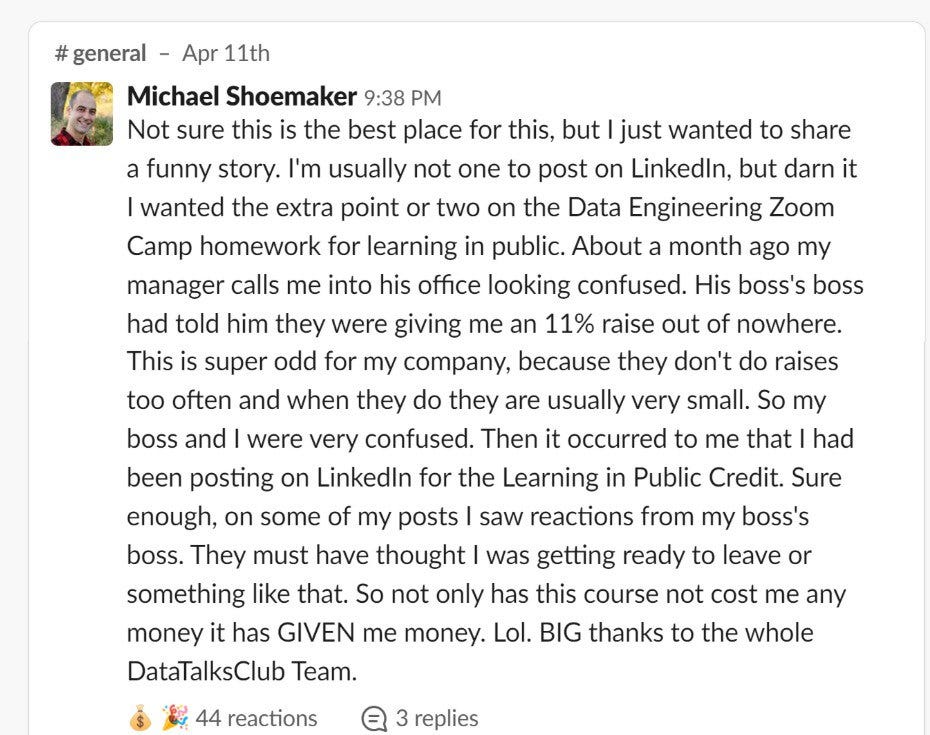
Learning in public makes your work visible.
Shawn Wang, a software engineer and developer advocate known for his writing on careers and learning, popularized the term “learning in public.” He says if you stay invisible, opportunities go to someone else. Publishing your work does not guarantee outcomes, but it increases the chance that the right people see what you can do.
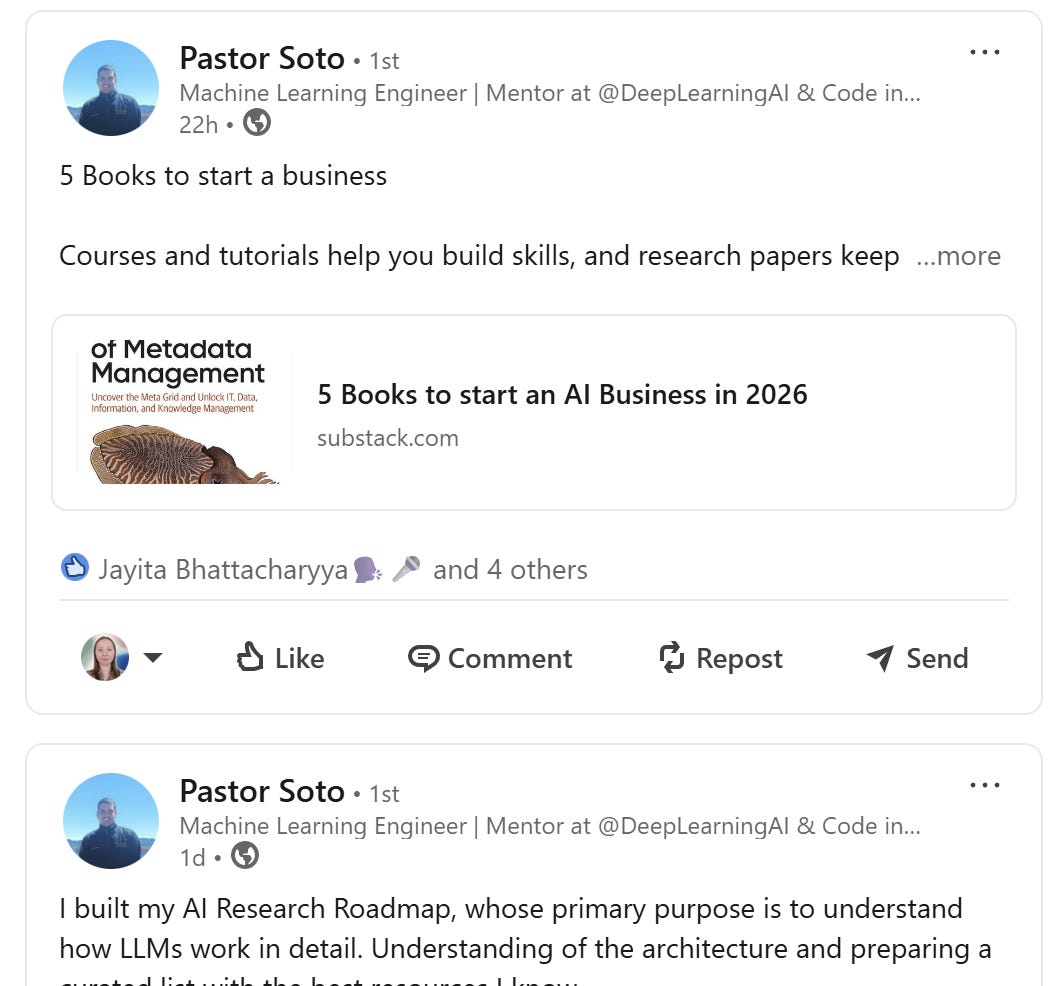
Pastor Soto joined ML Zoomcamp as a medical student with no prior industry role and no LinkedIn presence. During the course, he started sharing his learning progress publicly. Without applying anywhere, recruiters started to notice his profile and reached out to him, including one from Meta.
Admond Lee Kin Lim, a machine learning engineer and frequent writer on applied ML, made a similar observation. He noted that hiring managers are more likely to remember candidates who consistently publish relevant work because it shows evidence of skills beyond a resume.
2. Faster Skill Development
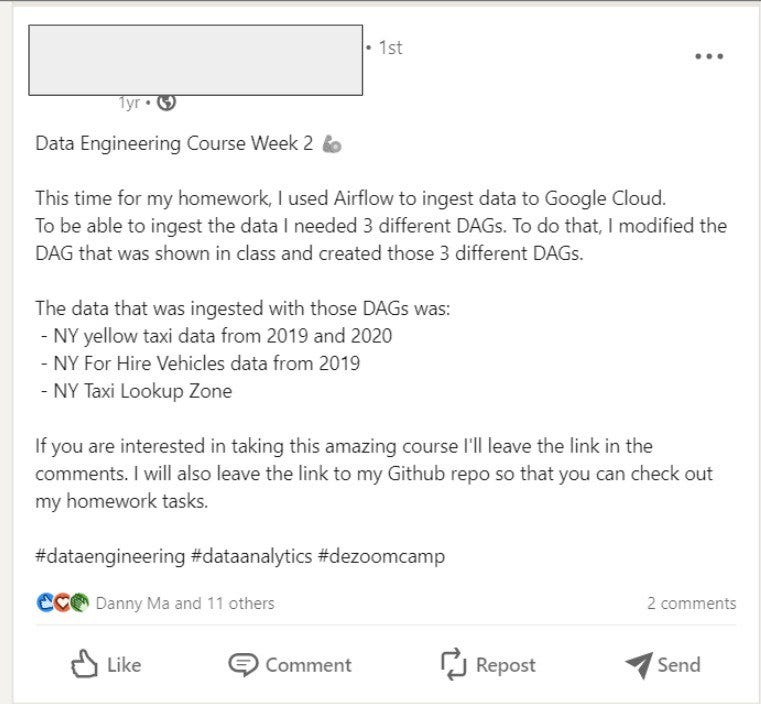
Writing forces precision.
Eugene Yan, a senior applied scientist who regularly publishes long-form technical essays, described writing as both a learning and validation tool. When you try to explain something publicly, gaps in understanding become obvious. His rule is straightforward: if you can’t explain it clearly, you probably don’t understand it yet.
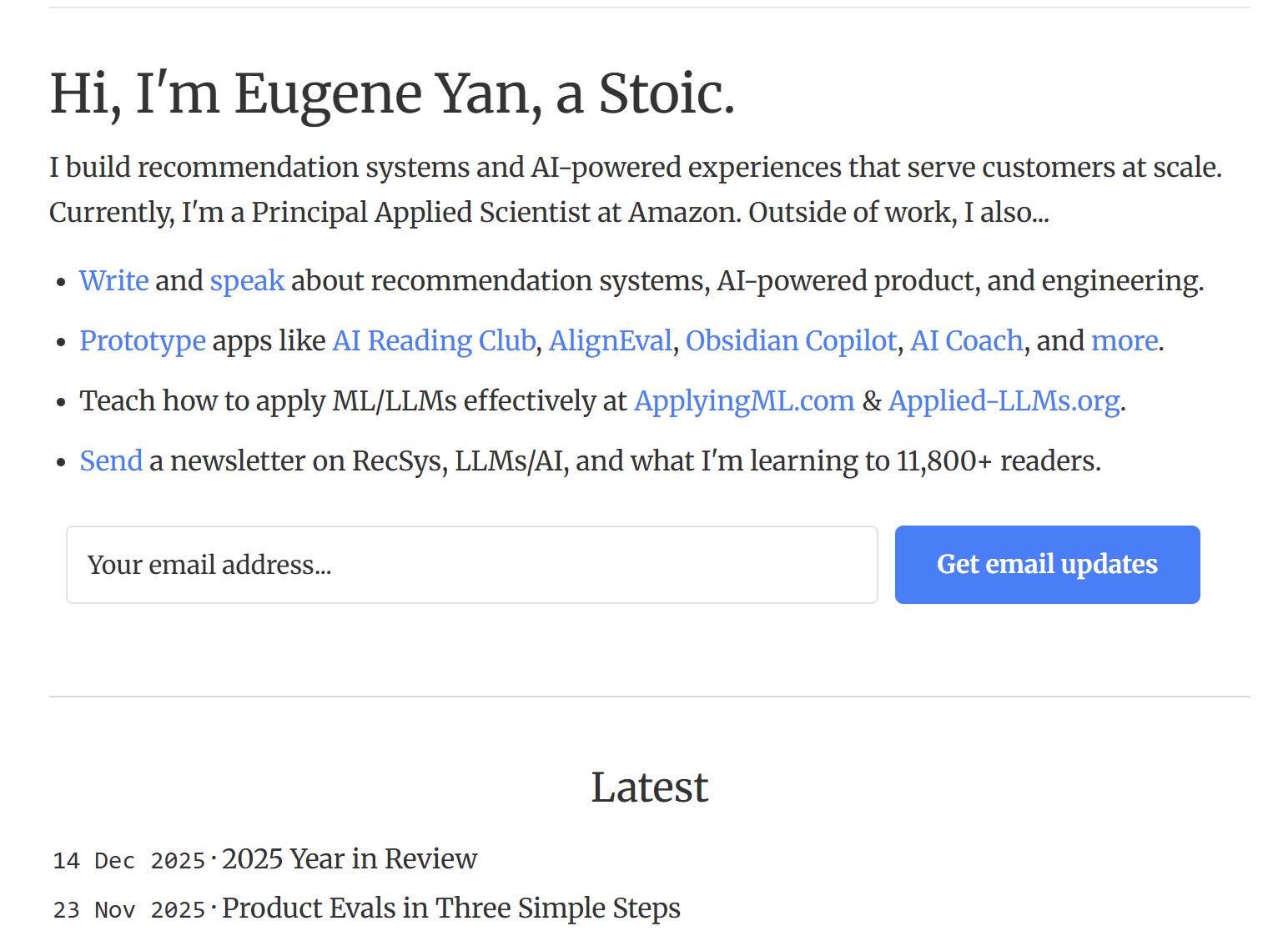
Pastor Soto experienced this from a learner’s perspective. Turning personal notes into public explanations pushed him to properly understand topics like evaluation metrics instead of skimming them. Admond Lee Kin Lim shared the same pattern: publishing forces you to double-check assumptions and sharpen your technical reasoning.
3. Feedback and Peer Learning
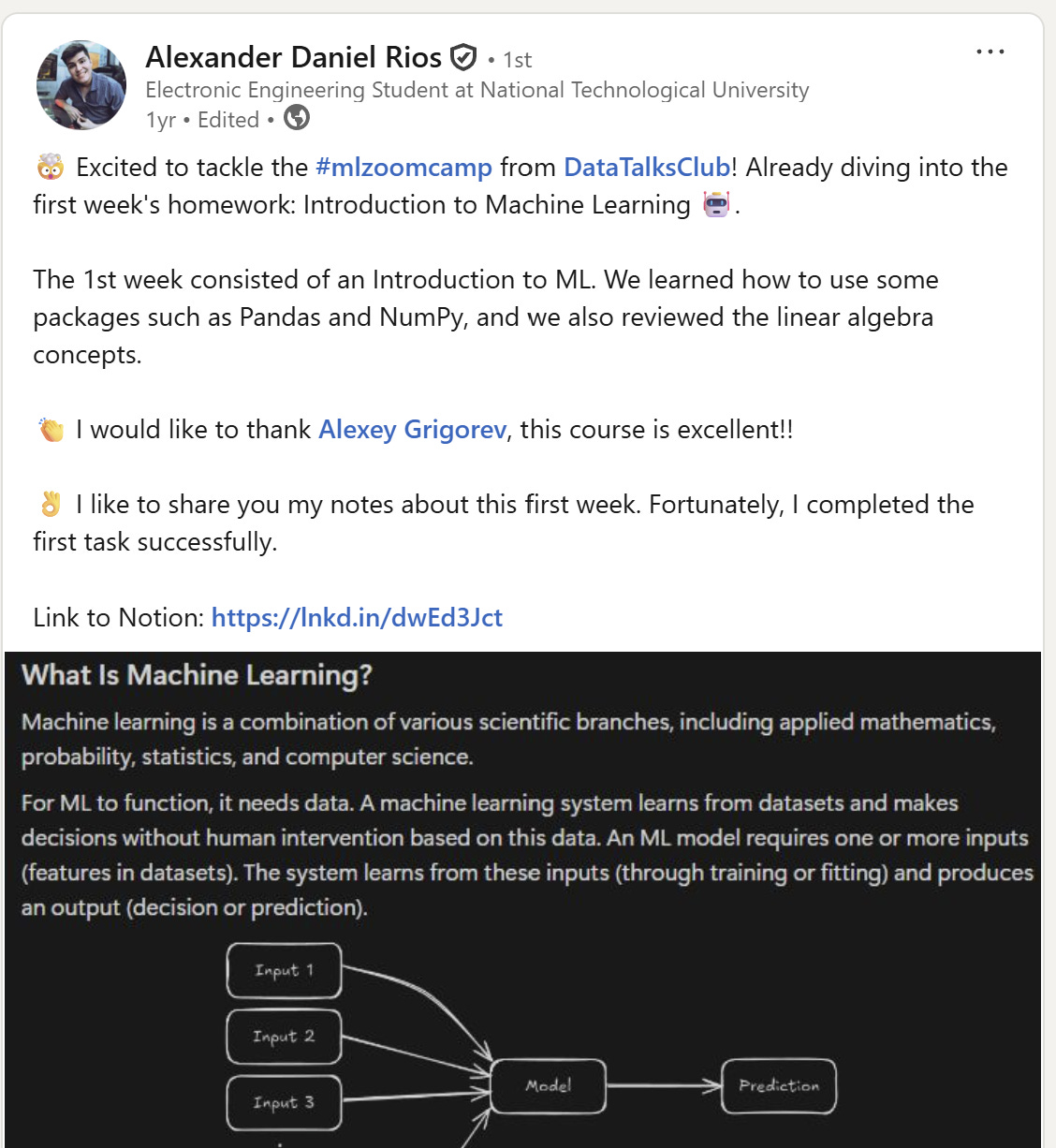
Publishing attracts people working on similar problems.
Will McGugan, an open-source developer and founder, shared that posting small, incremental updates about his projects slowly brought in people interested in the same technical challenges. That led to regular feedback and idea exchange without any deliberate networking.
Eugene Yan described public writing as a signal. It shows what you’re interested in and what you’re actively working on. The right people tend to respond.
Within Zoomcamps, Dashel Ruiz Perez pointed out that seeing others share progress in Slack made learning feel collective rather than isolating. You’re no longer solving problems alone.
4. Credibility Over Time
Learning in public builds credibility gradually.
Admond Lee Kin Lim says that personal branding comes from repeatedly helping others by sharing what you learn. Over time, people associate your name with specific topics.
Shawn Wang made a similar argument. Blog posts, talks, and repositories act as durable proof of competence. They continue to work even when you’re not actively networking.
Pastor Soto noticed a shift in perception as well. Publishing explanations changed how others saw him, from “student” to someone who could apply and explain concepts, which directly influenced recruiter interest.
5. Accountability and Motivation
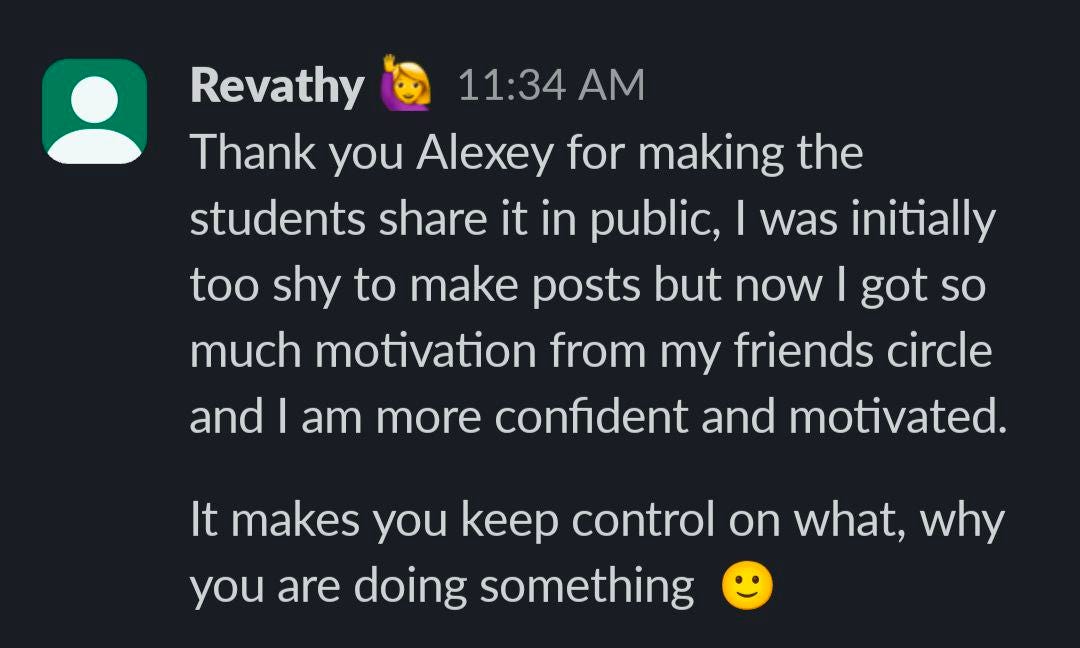
Public learning adds light external pressure.
That is important for long courses like Zoomcamps. Dashel Ruiz Perez explained that seeing regular updates from peers helped him stay consistent through a demanding Zoomcamp. It showed that progress was possible and worth sticking with.
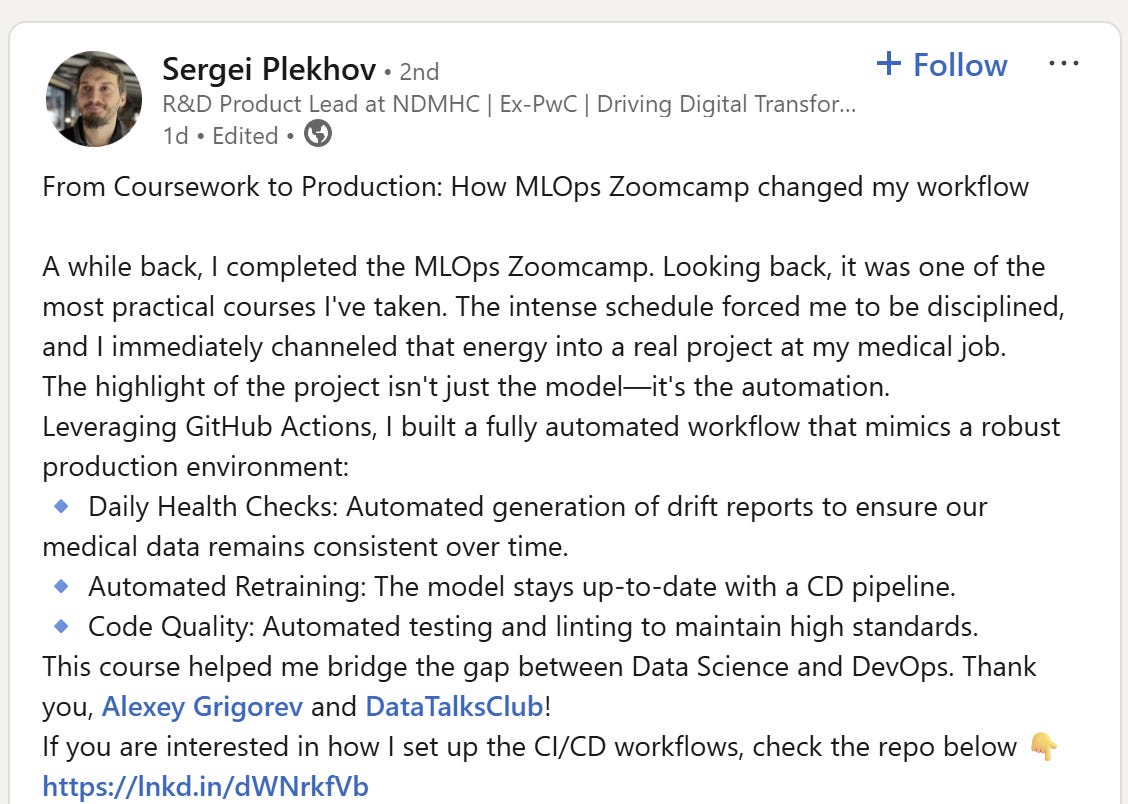
Aaisha Muhammad, another ML Zoomcamp graduate, mentioned leaderboards and visible progress nudged her to finish assignments she might otherwise postpone.
6. Support When You’re Stuck
Sharing struggles publicly often leads to faster solutions.
Dashel Ruiz Perez advised learners not to “miss the community.” Posting blockers or questions often revealed that others were facing the same issues.
Pastor Soto also shared imperfect or partially incorrect explanations. The discussions that followed helped him correct mistakes and deepen his understanding. Learning in public turned problems into shared problem-solving instead of private frustration.
7. A Visible Portfolio
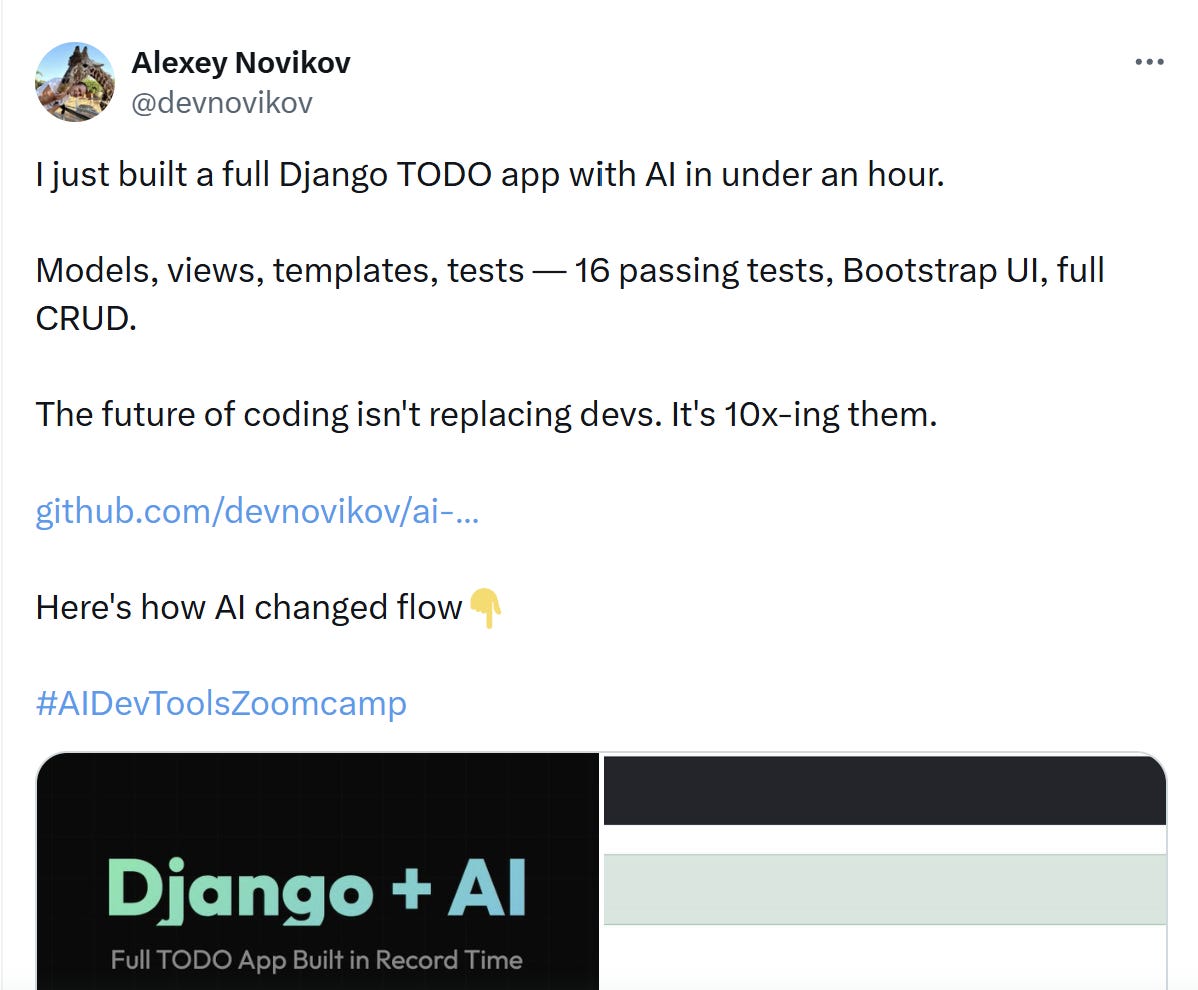
Learning in public naturally creates artifacts.
Daniel Egbo, an ML Zoomcamp participant who regularly shared his work, encouraged learners to publish notebooks, repositories, and analyses even if they felt basic. Visible work is more convincing than claims like “I know machine learning.”
For Zoomcamp participants, shared projects often became concrete proof of applied skills when applying for jobs or further studies. Eugene Yan’s blog posts and Pastor Soto’s LinkedIn updates work the same way: they show what someone can actually do.
8. Beyond Jobs: Unexpected Opportunities
Sometimes, learning in public leads to outcomes you didn’t plan for.
Will McGugan shared how public demos of his open-source work attracted unexpected investor attention. One widely shared post led to inbound outreach from venture capitalists and eventually a pre-seed funding round.
This is not something you can optimize for directly. But public works increase the surface area for these opportunities to occur.
If you’re a Zoomcamp participant or graduate and learning in public had any influence on your career journey, I’d be curious to hear your story. Reply to this email or leave a comment under this post.
Project Idea: Treat Your Social Media as a Side Project
If you’re inspired by learning in public, publishing online can be a worthwhile career project. It forces you to think more clearly about your work and leaves a visible record of what you’ve learned over time.
The key is to treat publishing the same way you would treat a side project: with a goal, simple rules, and regular feedback.
Best practices for efficiency
Batch work: write 2-3 short posts in one sitting instead of writing from scratch each time.
Write right after doing the work: notes taken immediately after an assignment or bug fix require less effort than writing later.
Reuse content: one assignment can become a short post, a code snippet, or a video overview.
Keep posts short: one idea per post is enough.
Action steps for the next week
Pick one platform and commit to it for now
After your next learning session, write rough notes for 2-3 potential posts
Turn those notes into short drafts in one sitting
Schedule or save them as drafts instead of publishing immediately
Publish one post this week and keep the rest for later
Learning in public doesn’t guarantee outcomes. But by batching and reducing effort, you make publishing easy enough to stick with, and that’s what makes it useful over time.
I plan to cover practical advice on posting consistently, sources of inspiration, the process of sharing your work online, and building your personal brand in one of the next newsletters. Subscribe to receive it right into your inbox.
I talked about the scary stories pipeline in one of my newsletters, and Pastor, whom we just mentioned in the learning in public section, recently shared a project inspired by that pipeline.
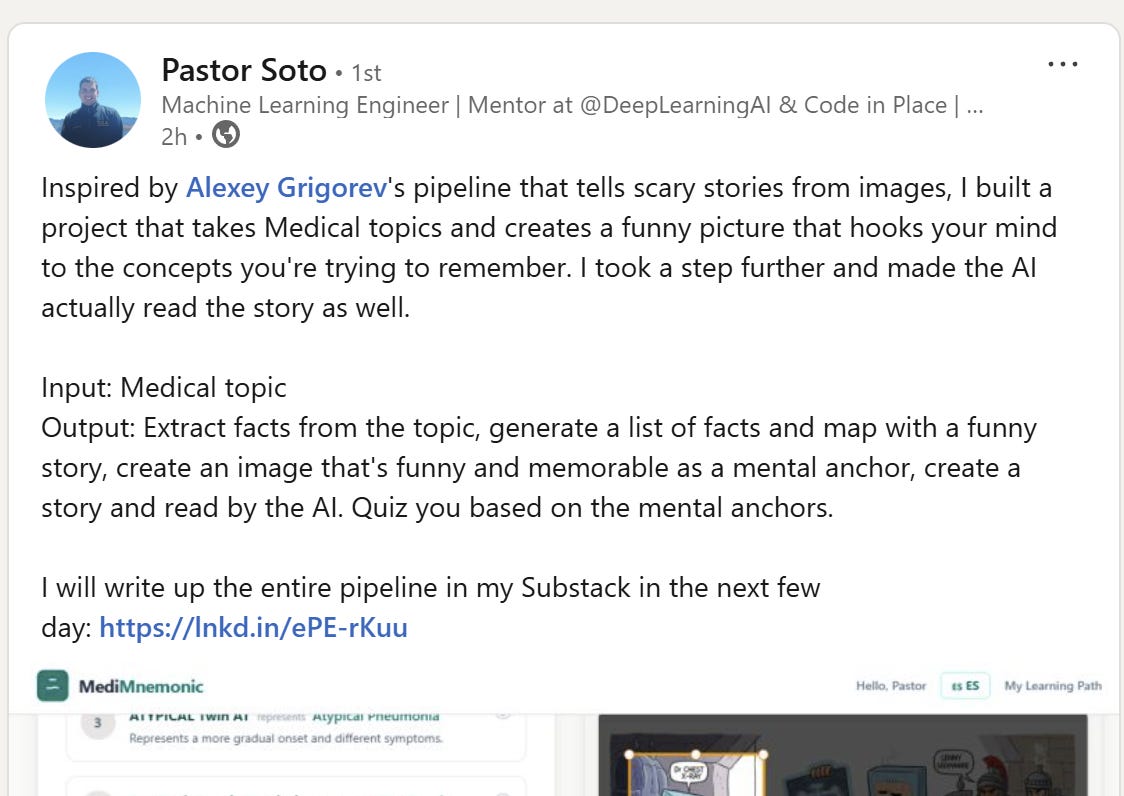
This is a clear example of learning in public: he built a concrete project and openly explains its structure and how it works.

My Experiments
1. Using an Agent from My Phone
I’ve been enjoying the experience of asking an agent to do things directly from my phone. I actively use GitHub Copilot for that type of interaction, as I described in my latest newsletter.

This time, I wanted to see how far I could push that idea with Claude Code.
I asked the agent to create the cheapest AWS instance with 8 GB of RAM, install Claude Code on it, copy my existing configuration, and make it accessible through a web interface. The agent created the EC2 instance, installed everything it needed, and set up both a web UI and a web-based terminal.
As a result, I have a dedicated instance that I can interact with from my phone. I can send it instructions and let it work in its own environment, without opening a laptop.
That said, it’s still not the same experience as Copilot. It’s less seamless and requires more setup. But it’s an interesting middle ground: more control than a local assistant, less friction than managing infrastructure by hand, and a useful way to experiment with agents operating in real environments.
Claude Code Custom Slash Commands
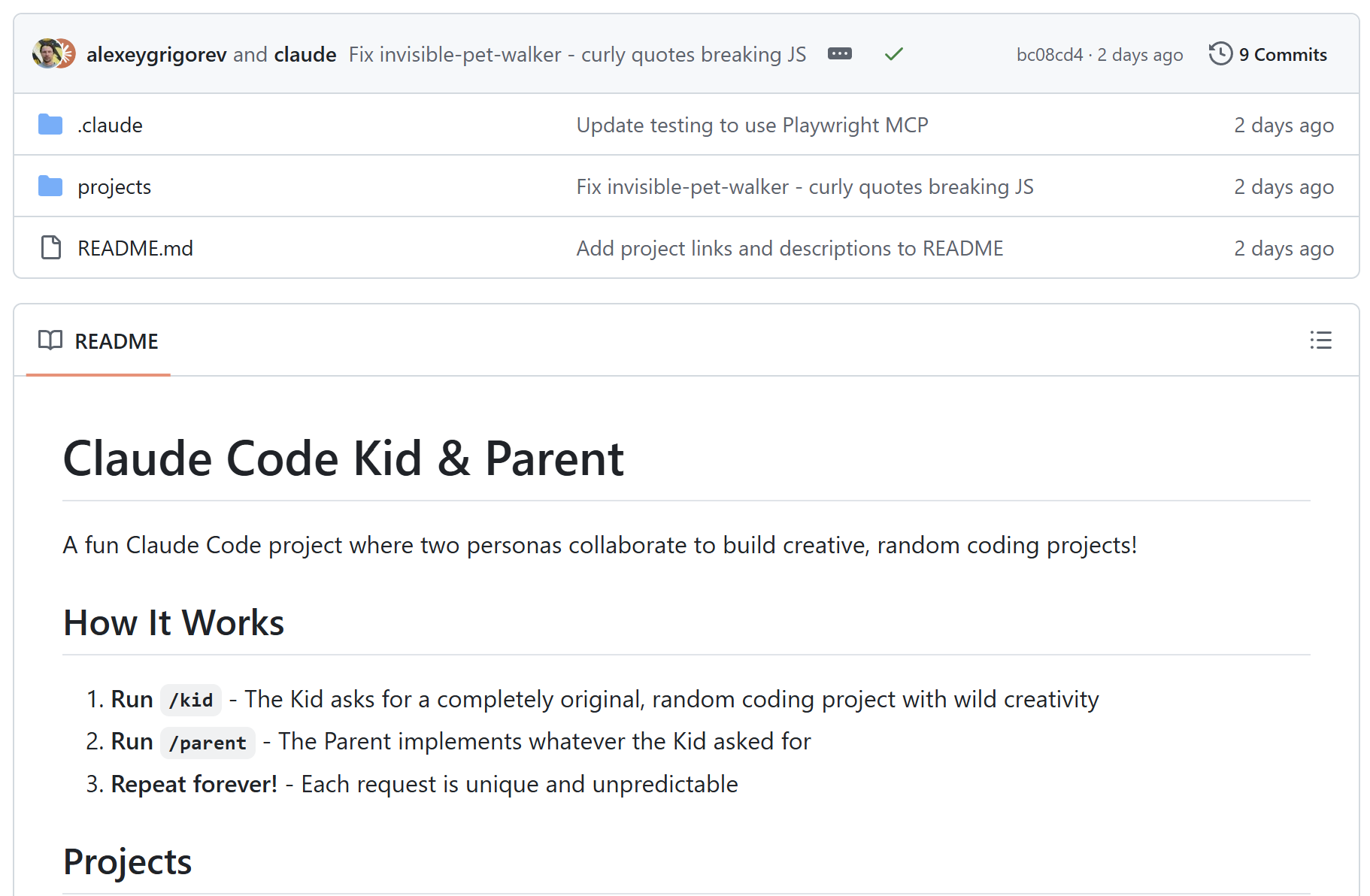
I recently ran an experiment with Claude Code after noticing that it supports custom slash commands. These commands are defined in a very simple way: you add a markdown file to a .claude/commands folder and describe what the command should do, in plain text.
With two custom commands, I automatically generated around 25 projects. Most of them are standalone HTML files with embedded CSS and JavaScript, plus a smaller set of simple Python scripts.
Since it turned out to be a project on its own and we have limited space in one newsletter, I decided to cover it separately in the next newsletter. This will also serve as an example of me learning in public and how I enjoy sharing my experiments and writing about them in this newsletter.
What I’ve Been Working On Recently
Anthropic introduced Agent Skills as an open standard, building on the ideas behind MCP and making skills portable across tools and models. OpenAI quietly adopted a similar concept in Codex. Visual Studio Code, Cursor, GitHub, and other platforms added support for the open Agent Skills spec.
That motivated me to put together a new live workshop on agent skills.
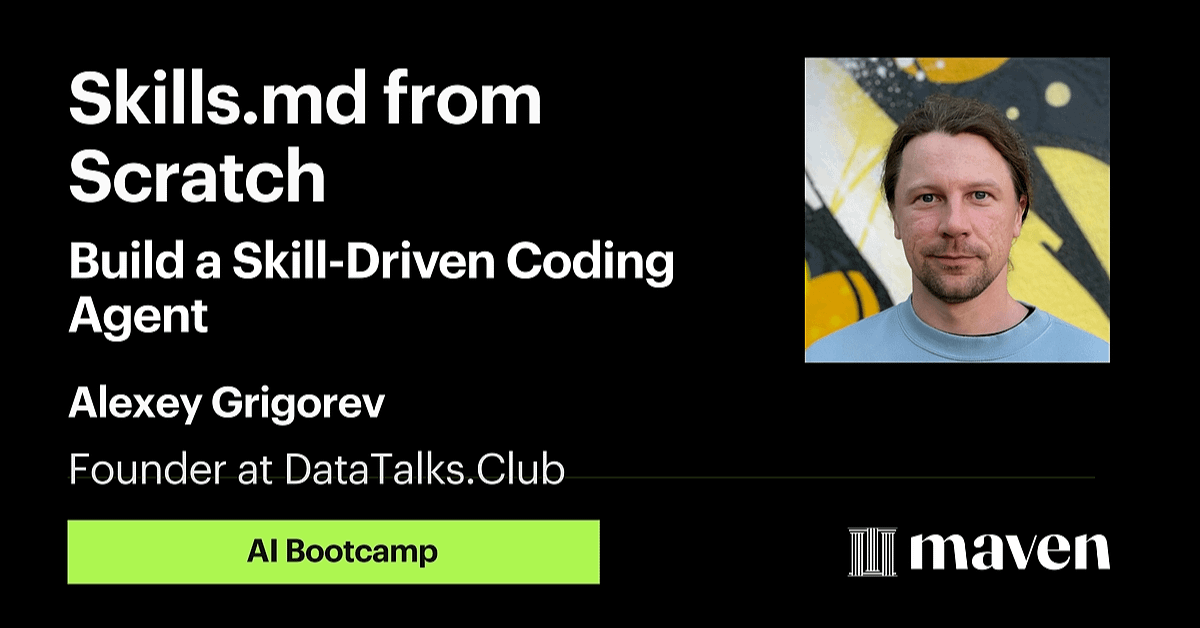
It focuses on understanding the skills.md model from first principles, implementing a simple skill registry, and using skills inside an agent loop for real coding tasks.
Courses
AI Agents Email Crash-Course (Cohort Edition): I’m running a free cohort-based version of the AI Agents Email Crash-Course this December and January. To complete the cohort, you’ll finish the project and review three other submissions; in return, you’ll receive a certificate of completion signed by me.
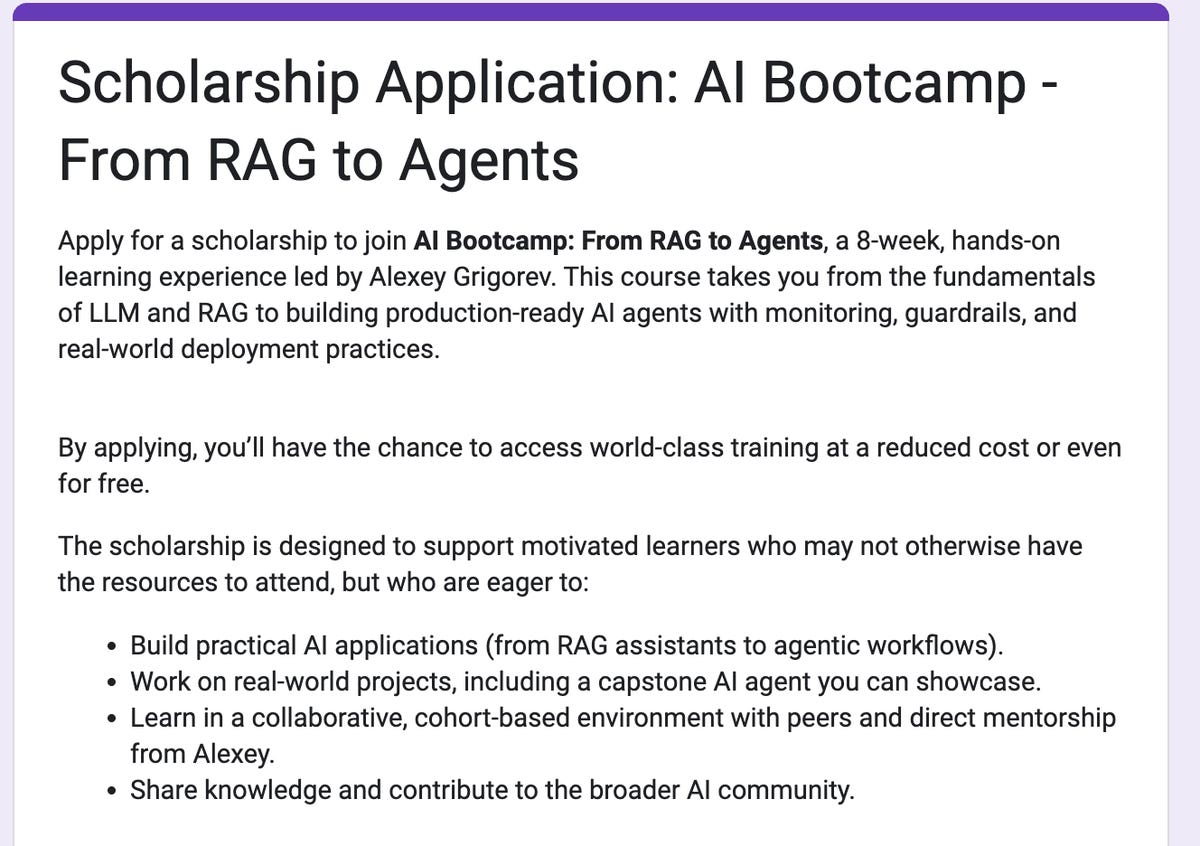
AI Bootcamp Scholarships (New Cohort): I’m launching a new iteration of the AI Bootcamp, and this time I’m also offering several scholarship spots. I know that not everyone has the budget for a paid program, but many people are highly motivated to learn, practice, and build real systems.
Data Engineering Zoomcamp: New cohort starts on January 12, 2026. A free 9-week course on building production-ready data pipelines: ingestion, orchestration, warehousing, analytics, and more.
dlt Fundamentals: My friends from dlthub created a course on building robust ELT pipelines. Register now to join our new holiday lesson on December 22, where you will integrate LLMs into your workflow and compete for 50 swag packs.
Interesting Resources
Claude Use Cases: a curated library of real-world Claude use cases across research, writing, coding, analysis, and everyday work, organized by role, industry, and feature. It shows concrete, end-to-end examples of how Claude and its integrations can be applied to practical tasks rather than abstract demos.
AI Engineering Hub: a large, open-source GitHub repository that aggregates 90+ production-ready projects, tutorials, and reference implementations covering LLMs, RAG, agents, MCP, multimodal systems, and evaluation. It is structured by difficulty and use case, making it a practical learning and experimentation resource for beginners through advanced AI engineers.
Edited by Valeriia Kuka
Wow! Thank you so much for the shootout!
I found great value in sharing publicly. I had connected with amazing people all over the world, learning from them, and interestingly enough, some people want to learn from me as well.
Zoomcamp is where I got the most value in my career. Happy to be part of the journey!
About learning in public: Given you track this (for extra points) -- have you thought about doing some analyses, along gender, seniority and country of origin lines?
When I was a (STEM) researcher at a university, I certainly read and used the message boards and mailing lists, but didn't post much myself-- and noticed other women were the same. There was a collective hesitancy to expose oneself in public to appearing 'less' (experienced, knowledgeable, whatever), as there was already a lot of prejudice floating around.
I also do some of these courses and workshops where I think people expect me to already know it. Sharing my learning of something people expect me to already know seems counterproductive (thus the question about seniority).
But generally I agree -- you don't understand something until you can explain it well.