

One of the first videos I ever published on YouTube was about getting a data science job. I presented the algorithm that you can follow to get hired in data science. Many things have changed since then, but the algorithm that I described still works.
In this article I take that algorithm and update it for AI Engineering. The updates are minimal and you can use this algorithm for any other engineering job.
The Job Search Algorithm
The algorithm is straightforward:
Network: Connect with people
Apply: Apply for jobs even if you don’t qualify
Build: Create projects and share them online
Interview: Record what you were asked
Reflect: Review and improve
Repeat
This is a while loop. Continue networking, applying, building, and interviewing until you receive an offer you like.

Step 1: Network
Networking helps you understand the market, find opportunities, and learn what companies are actually looking for.
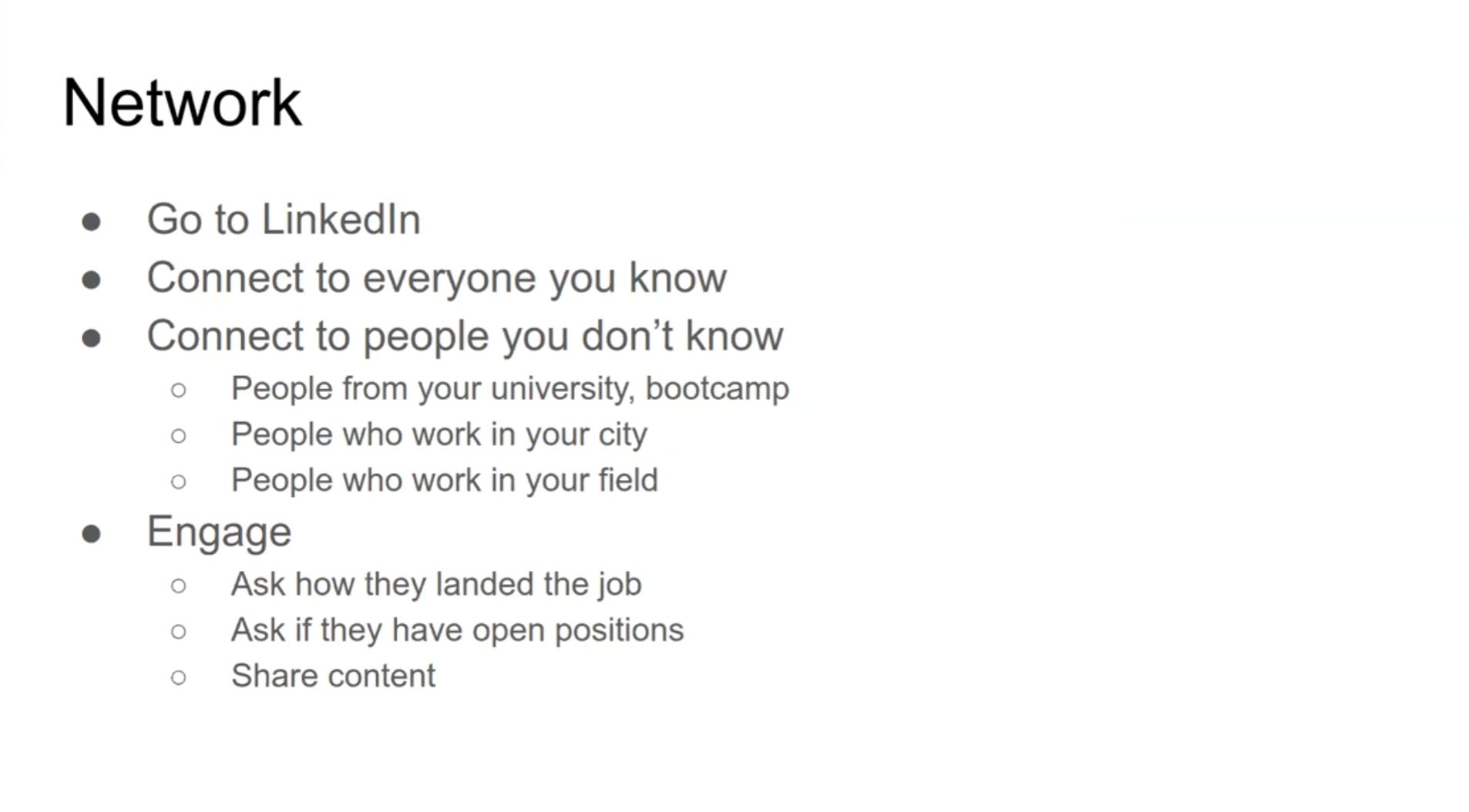
Use LinkedIn and meetups for that.
Talk to people working in your field. Talk to people who work as AI engineers. Ask about the projects they work on, and the technologies they use. And ask if they are hiring and ask for a referral.
If you are a junior, look for other juniors who have recently got a job. Ask what helped them get hired, which companies they targeted, what the interview process involved, and what they would do differently.
A conversation doesn’t have to end with a referral. By talking to people you discover companies that hire, understand which skills to develop, improve your search strategy, and meet interesting people.
Step 2: Apply
Start applying for jobs right now. Many people postpone it because “they are not ready". You are ready. Apply even if you don’t qualify.
Don’t reject yourself because you are unsure if you’re qualified. Apply and let the hiring team evaluate your application. If you apply, you have a chance to move forward. If you don’t, you never will.
When you look at the job requirements, don’t treat them all as mandatory. The job description always describes the ideal candidate and often these candidates don’t exist.
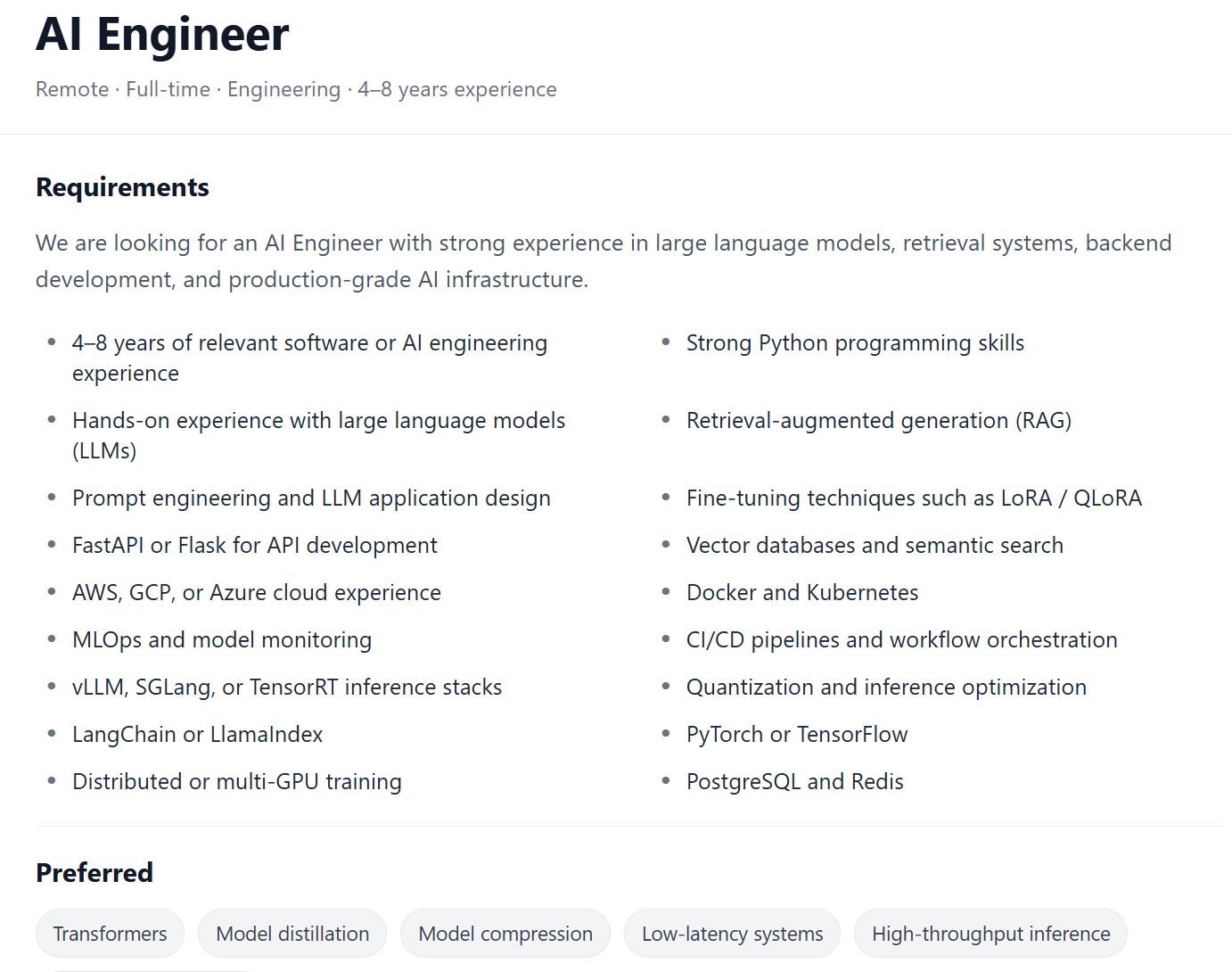
There are, of course, cases where you shouldn’t apply. If you’re a junior, but the position is senior, then don’t apply. If you match only 20% of the requirements, it’s also a bad sign. If you’re in doubt, apply.
If you apply for relevant roles but don’t hear back, review your CV. Make sure it shows the experience, skills, and projects that are relevant to the positions you apply.
Recently I published a workshop at AI Shipping Labs about tailoring your CV for AI engineering roles that you may find helpful (heads up: it requires a paid subscription).
Step 3: Build
You learn by doing. When you apply, note which skills are required for the positions you apply for, and build projects using these technologies.
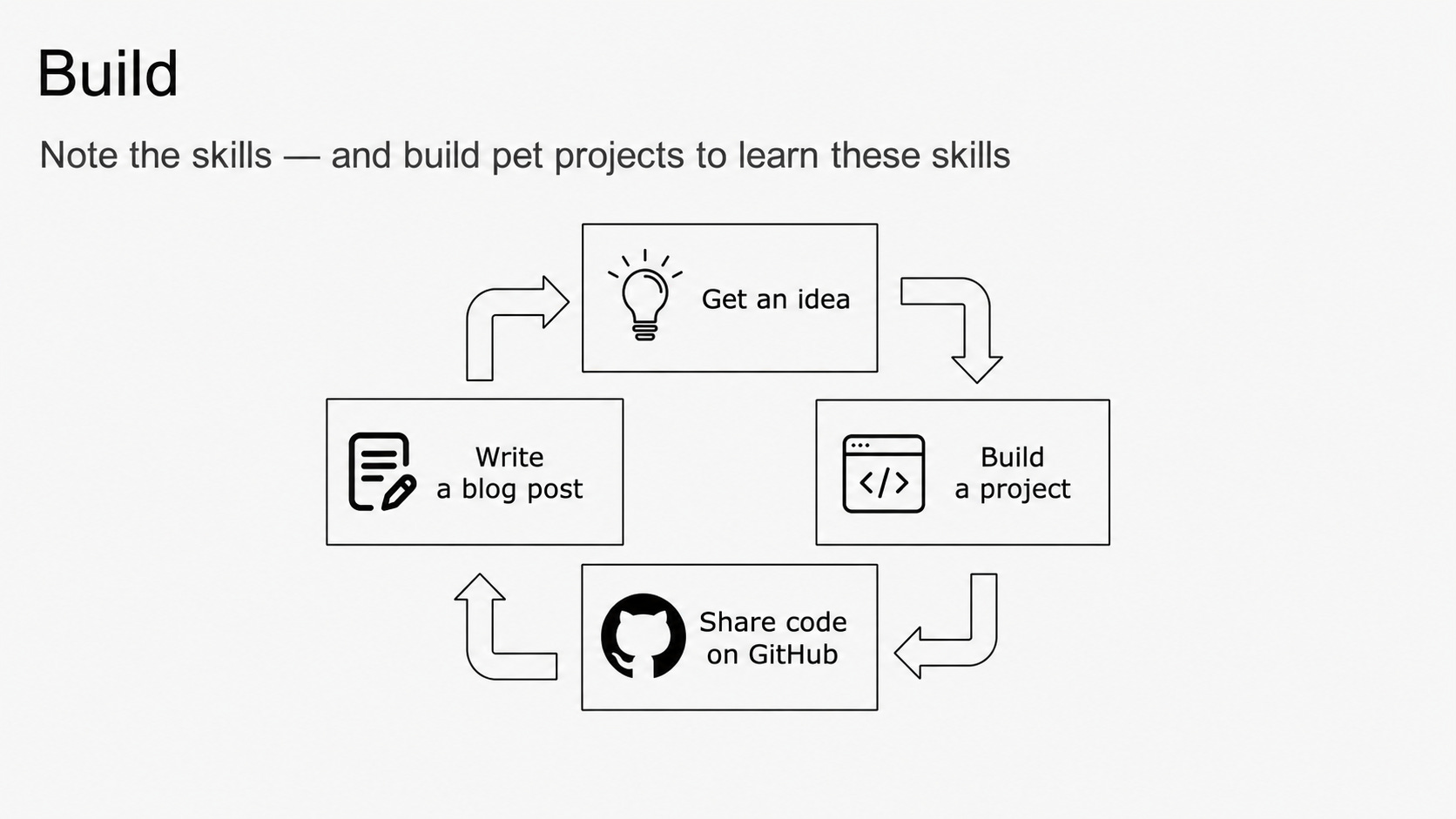
Always timebox these projects. Set the time limit to 10-20 hours and then move on to the next project. At this stage, your goal is to have an awareness of different technologies and an understanding when to use them. You can go deeper when you’re already working.
I wrote a full guide on building projects with six steps you can follow:

A complete project should include working code in a public GitHub repository and a clear README. The README is the most important document of your project, so make sure you put enough effort into polishing it before you add a project into your portfolio.
A few weeks ago I wrote an article about that:

Don’t build these projects silently. Share what you build and what you learned online.
Here’s a suggested sequence of posts for LinkedIn and/or X:
Describe the project idea and the technologies
For each milestone, post a screenshot or a code snippet with what you built
When the project is ready, announce it and publish the link
Optionally, write a blog post
And yes, there’s another article I wrote about it:

Step 4: Interview
Once your CV gets past the screening stage, you get invited to an interview.
Don’t treat interviews as exams. You’re not in school. It’s a two-way process: they evaluate you, but you also evaluate them.
Interviewing is a also skill. Your first interview may not be great, but it improves with practice. Each subsequent interview helps you identify gaps in your preparation and see what you should do differently next time.
Some interviews will lead to rejections. It’s normal and may happen for many reasons outside of your control: the company chose someone with more suitable experience, hired an internal candidate, changed the role, or froze hiring. Don’t take the rejections personally, learn from them and move on.

The hiring process varies between companies, but typically you will have some of these interviews in the pipeline:
Recruiter interview: a short conversation about your background, motivation, availability, salary expectations, and basic fit
Theoretical interview: questions about LLMs, RAG, agents
Coding interview: coding, Python, SQL, code review, or practical engineering tasks
Project deep dive: a deeper discussion of your experience and past projects
System design: defining the architecture of a project
Behavioral interview: examples of how you dealt with different situations at work (and outside)
Take-home assignment: a small project you complete at home
You probably won’t get all of them: some stages may be bundled in one round, and other stages may be absent.
Now let’s go through each step of the hiring pipeline. In this article, I mostly used the materials from AI Engineering Field Guide. You will find a lot more relevant information there if you’re preparing for AI Engineering interviews.
1. Recruiter interview
The recruiter is the first person you speak with during the interview process.
It’s not a technical interview. They will tell you about the company, the role and ask some basic questions.
You should be ready to answer:
“What do you know about our company?” Make sure you do some basic research. If you can’t answer it, the interview process is likely to stop there (it happened to me!).
“What are your salary expectations?” Research the market and be ready to provide a realistic range. You can dodge this question and delay it to other stages, but I don’t think it’s helpful.
“Tell me about yourself”. Prepare a 3-minutes story. It will be useful at later stages too.
Use this interview to make sure you understand what the interview process looks like and what the expectations are at each stage of the process. Ask for tips how to prepare for these stages.
2. Theoretical interview
There will be one or multiple rounds where the company checks if you understand how LLM applications work. They may appear in a dedicated technical interview or as part of the project deep dive or AI system design sessions.
For AI Engineering, you will be asked about:
LLM behavior, prompting, context windows, and structured outputs
RAG, retrieval, reranking, and common ways RAG fails
Agents, tool use, tool design
Evaluation and debugging
Monitoring, cost, latency, and scalability
Fine-tuning, model training, and transformer internals can appear too, but this only happens for roles that require these skills.
You can see theoretical questions in the “Theory” part of AI Engineering Field Guide interview preparation section.
3. Technical interview
Coding rounds generally fall into two categories: implementation and algorithm rounds.
Traditionally, for implementation rounds, you’re given a task like “implement a web crawler”. You’re not expected to deliver a fully working solution, but rather demonstrate your approach to coding. You may need to design (in the “object-oriented design” sense of the word) the interaction between different components, define proper abstractions, and then implement only some parts of it.
However, more and more often companies give a vague task and ask you to use AI to implement it. You are expected to produce a reasonably complete working solution. The interviewer evaluates how you interact with the coding agent, how you review the code, test it, correct errors, and refine the implementation.
The algorithm rounds usually involve easy and medium Leetcode-style problems. Hard problems are rare. There is already a lot of information on the Internet on how to prepare for them, so I won’t spend time on it. Joining Leetcode and solving some problems there definitely helps.
You can see technical questions in the “Coding” part of AI Engineering Field Guide interview preparation section.
4. Project deep dive
Project deep dive interviews assess your level of seniority and check if your CV matches the reality.
At my previous jobs I regularly conducted these interviews.
I start by asking the candidate to introduce themselves and then ask what they were doing recently. Our discussion naturally goes into projects they worked on and then I start going deeper with questions:
What problem does this project solve?
How does it work?
Which part did you build?
Who made the technical decisions? How?
What went wrong?
What would you change if you were implementing this project today?
This is by no means an exhaustive list, but it should give you some ideas of what to expect.
I recently had a workshop about it at AI Shipping Labs. Based on it, I wrote an article: AI Engineering Hiring Manager Interview (it’s free).
You can see deep-dive questions in the “Project Deep-Dive” part of AI Engineering Field Guide interview preparation section.
5. System design
If you’re applying for more senior roles, you’ll have a system design round. They are very uncommon for junior roles.
There are two types of system design interviews: “classical” system design and AI system design.
AI engineers are software engineers who specialize in AI, so they are expected to design software systems too. That’s why one of the interview rounds may be classical system design.
In these interviews you will need to design a system related to what the company and the prospective team do.
A food delivery company may ask you to design an order-processing or delivery-tracking system. When I interviewed at Yandex, they asked me to design search. When I interviewed with Meta, they asked me to design a geo-aware recommender system. When I worked at OLX and we were hiring people to join the recommender platform, we were asking to design a recommender system for an online marketplace.
But for AI engineers there’s also an AI system design round. Common tasks include designing a document Q&A system, a coding assistant, an AI search engine, or an agent. The specific system will depend on what the team is doing.
For these interviews, clarify the requirements, ask which data is available and what’s the expected scale. After that, sketch the main components of the system.
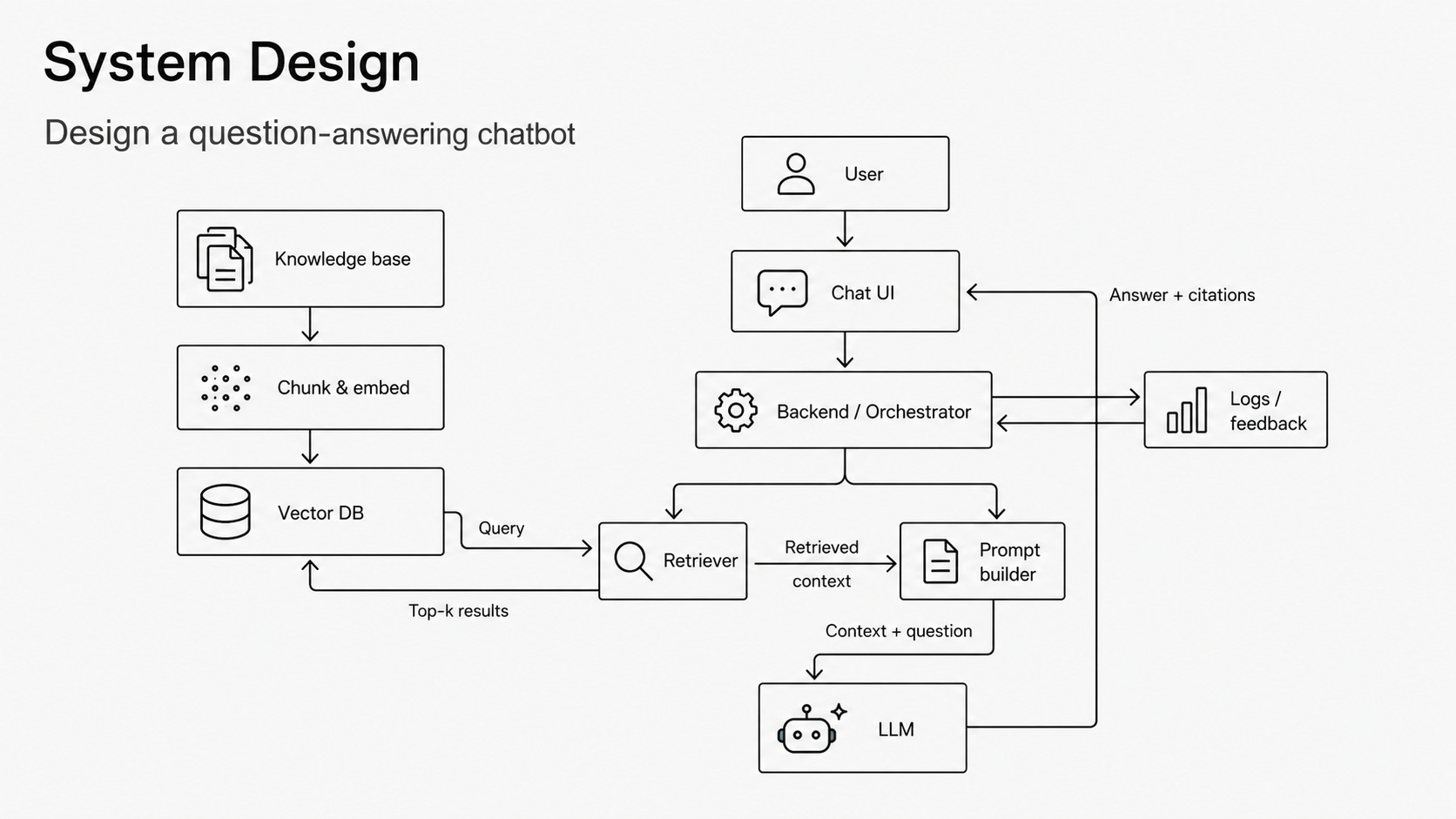
You can see AI system design questions in the “AI System Design” part of AI Engineering Field Guide interview preparation section.
6. Behavioral interview
The behavioral interview checks how you collaborate, make decisions, take responsibility, and handle setbacks. “Tell me about a time you needed to help a colleague”. There’s nothing specific in these interviews for AI engineers.
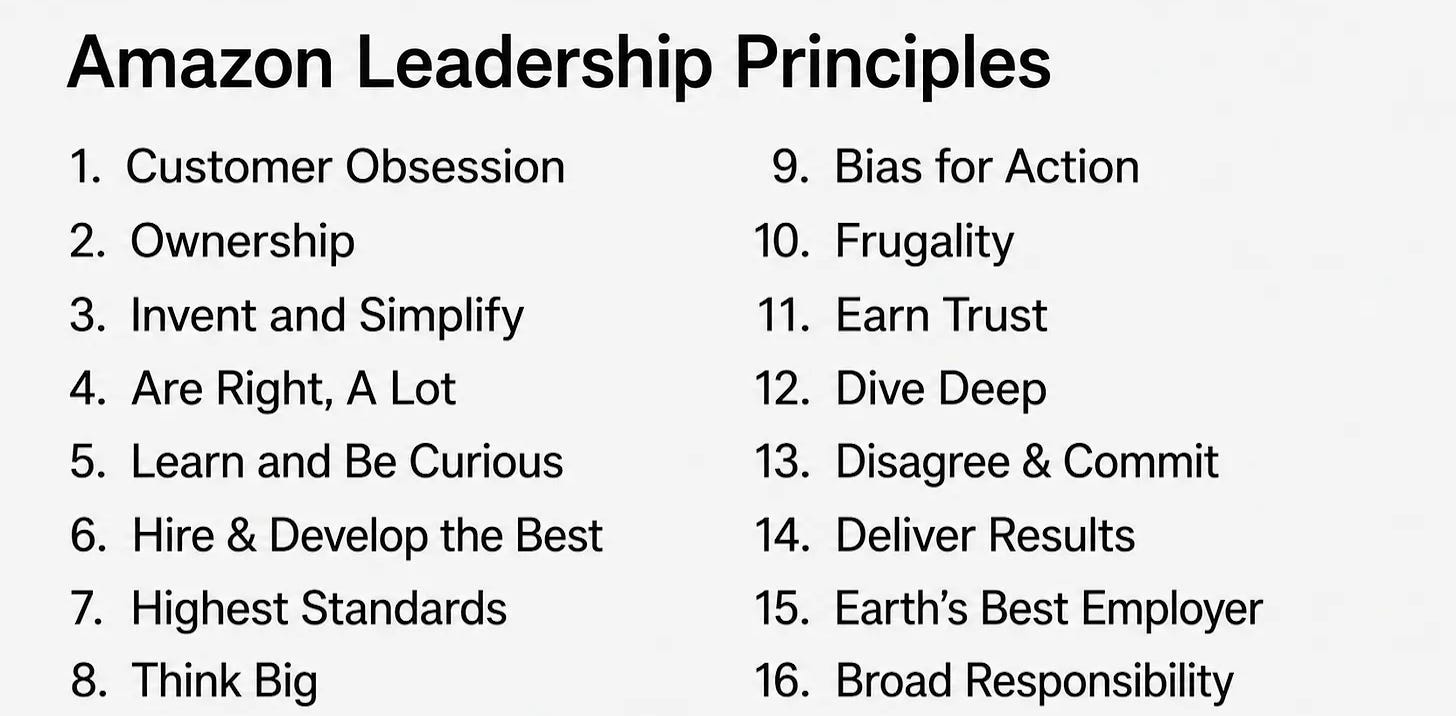
The best way to prepare for these interviews is to research the company’s values. You can ask the recruiter about them too. For each value, prepare examples of how you demonstrated them. As a general reference, I recommend Amazon’s Leadership Principles.
You can see behavioral questions in the “Behavioral” part of AI Engineering Field Guide interview preparation section.
7. Take-home assignment
In take-home assignments you need to build a small AI application, submit the code, a README, and a working demo. It’s also typical to have a defense session where you need to present the solution and answer questions about it.

Before starting, clarify the requirements, ask if you can use AI tools, and what the evaluation criteria are.
Before finishing, make sure you have tests, an evaluation set, and a good README that describes the system well.
Take-home assignments are time-consuming. They are a good addition to your project portfolio, but if you interview with multiple companies, and all of them give you homework, it can add up.
If you’re short on time, it’s okay to decline them. When you do, make sure you have projects in your portfolio that demonstrate the qualities they want to assess. Then you can say “I unfortunately don’t have time to work on it, but I have similar projects on GitHub and can walk you through one”. Don’t expect it to work with everyone, but some companies may agree to this.
When getting a home task, watch out for warning signs like these:
You get an automated take-home assignment right after applying, even before speaking to anyone.
The company states the task takes two hours, but the requirements suggest it could take several days.
The company won’t clarify how your submission will be assessed or utilized.
In these cases you may spend time working on the test and never hear back from the company after submitting your project.
You can see examples of tasks in the “Home Assignments” part of AI Engineering Field Guide interview preparation section.
Step 5: Reflect (after the interview)
After each interview, write down all the questions you were asked and tasks you were given. What was difficult? Which answers could have been better?
You can also talk to AI, describe in detail how the interview went, and ask for feedback.
Write that all down in your interview journal.
This will help you identify areas where you can improve, and give better answers in the next interviews.
If you’re rejected, ask the company for feedback. Many companies will decline: there’s a non-zero chance that you may sue them and use this feedback against them, so they won’t risk it. But some will share it - most likely over a phone call. Also, don’t take it personally. Rejections are part of the process.
Continue networking, applying for more jobs, keep building and sharing what you learn.
If you get an offer - congratulations! But don’t rush into accepting it. Evaluate if the package is good and if you will like working there.
If you’re interviewing with other companies, finish the process with them too. It’s okay to be explicit about it with the company that made the offer. If they are pushing you to accept it as soon as possible, this is a red flag, so consider this carefully before agreeing. You got one offer, so you’ll definitely get others.
Good luck and have fun!
What I’ve been working on this week
1) Building and deploying a website with ChatGPT Work


This week, I experimented with building a small website using ChatGPT Work.
I’m really impressed. I sent it photos of a music festival brochure (it was Brutal Assault) and asked it to turn them into a website. It extracted the schedule, built a festival planner, and deployed it to a public URL that I could share with others.
I didn’t even need to run Codex. Everything happened from my phone from the ChatGPT app. It also has built-in authentication (via ChatGPT) and a built-in database.
2) FAQ Assistant in Practice
Last week I wrote an article about the FAQ assistant that we use at DataTalks.Club. Then this week I did a webinar about it where I gave a more detailed overview of the system.

3) Building a full-stack application with AI
I hosted the second workshop for AI Dev Tools Zoomcamp. In the first, we talked about specification-driven development, loop and graph engineering. In the second, I showed how to build an end-to-end application with frontend, backend, and a database. As an example, we built an application for system design interviews.
I’m hosting the notes on Substack, so you can read them here:

There will be more workshops and events for AI Dev Tools Zoomcamp:
August 10: Test, Containerize, and Deploy an AI-Assisted App
August 18: DevOps and Observability for AI-Built Apps
August 24: Pre-Course Live Q&A
August 31: Course launch
I will publish the materials from all these workshops as Substack articles too.
4) Inference Engineering - AI Shipping Labs book club
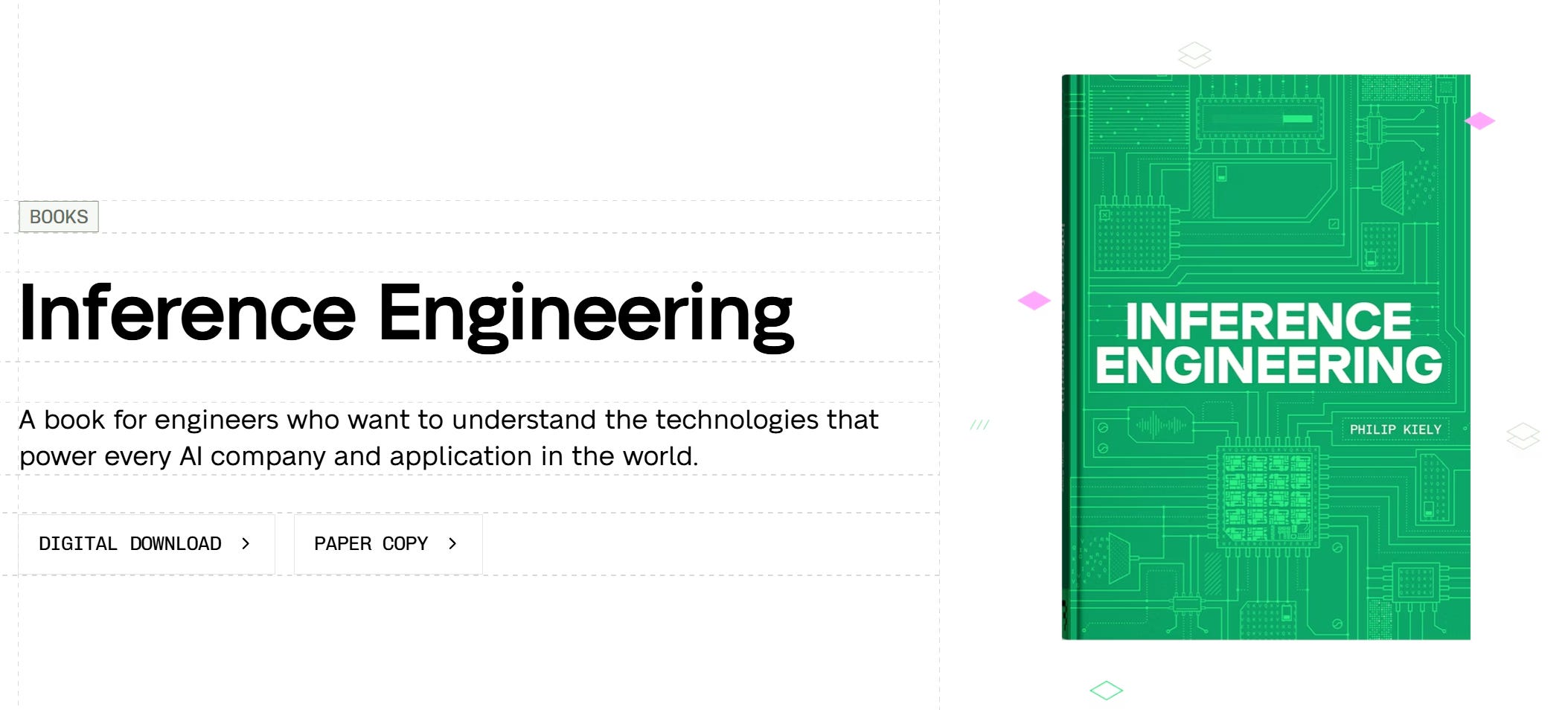
We are also starting a book club at AI Shipping Labs.
Our first book is Inference Engineering by Philip Kiely. It covers model architecture, hardware, serving software, optimization, cost, reliability, and running inference systems in production. The digital edition is available for free.
The kickoff is on August 10 (Monday) at 5:00 PM CET. We will review the book, discuss the reading cadence, and decide together how the sessions and discussions should work.
5) Stock Markets Analytics Zoomcamp

In DataTalks.Club, we’re preparing the next cohort of Stock Markets Analytics Zoomcamp. It starts on August 24.
The course provides a gentle introduction to stock market trading, Python programming in Google Colab, analytics, and data visualization.
Edited by Valeriia Kuka